Twitter Drops Other Shoe, Which You All Saw Coming, Right?

Way back in the spring of 2010, when Twitter was constantly under siege for “not having a business model,” I co-hosted “Chirp,” Twitter’s first (and I think only) developer conference. This was just two and half years ago, but it seems like a decade. But it was at that conference, in an interview with me, that then-COO (now CEO) Dick Costolo first laid out the vision for “the Interest Graph.” I wrote about this concept extensively (herehere, here), because I felt that understanding the interests of its users would be the core driver of Twitter’s long-term monetization strategy.

Fast forward to now. Twitter today announced its “promoted” suite of ad units may now be targeted by user interest, which to me is a long-expected move that should clarify to anyone confused by the company’s recent announcements (cue link to recent tempest). Twitter’s statements around its decision to sever ties with Instagram and Tumblr couldn’t be more clear:

We understand that there’s great value associated with Twitter’s follow graph data, and we can confirm that it is no longer available to (insert company here)…

Read More
7 Comments on Twitter Drops Other Shoe, Which You All Saw Coming, Right?

SIGN UP FOR THE NEWSLETTER

Stay up to date on the latest from BattelleMedia.com

Here We Go Again: The Gray Market in Twitter and Facebook

So, casually reading through this Fast Company story about sexy female Twitter bots, I come across this astounding, unsubstantiated claim:

My goal was to draw a straight line from a Twitter bot to the real, live person whose face the bot had stolen. In the daily bot wars–the one Twitter fights every day, causing constant fluctuations in follower counts even as brands’ followers remain up to 48% bot–these women are the most visible and yet least acknowledged victims…

There it was, tossed in casually, almost as if it was a simple cost of doing business – nearly half of the followers of major brands could well be “bots.”

Read More
18 Comments on Here We Go Again: The Gray Market in Twitter and Facebook

If Google Were Really Evil…

My morning routine was interrupted today in a big way – because Twitter was down. I hadn’t realized how much I depend on the service for any number of things, from tossing out the headline or two that I find interesting as I read my feeds, to checking the status of the conversation around stuff I’ve written the day before, to logging into other services I use through my Twitter account. In short, this morning when Twitter went down, much of my Internet experience did as well.

Huh.  Anyway, I wanted to see if this was a local thing, or if a lot of folks were experiencing it, so I went to Google+ and asked. Within a minute, I had ten responses, nine people said Twitter was down for them as well. In five minutes, it was 21 of 22. That’s a lot of engagement.

So I got to thinking….if Google was really evil, it’d do something like this when Twitter goes down:

Read More
13 Comments on If Google Were Really Evil…

Halfway Through The Year: How’re The Predictions Doing?

It’s time to review how my Predictions 2012 are faring, now that half the year has slipped by (that was fast, no?).

One thing that stands out is the timing wrt Twitter – my first two predictions were about the company, and now that I think about it, given the news just this week (and the attendant debate), I should have realized how the two could be in direct conflict with each other. It all makes for some interesting chin stroking, which I’m busy doing while on vacation – fishing the Rio Blanco up above Meeker in Colorado. Yes, you may now give me shit for writing that.

But to the review: I’ll take them one at a time:

Read More
14 Comments on Halfway Through The Year: How’re The Predictions Doing?

In 1844, Morse Gets The Scoop, Then Tweets His Dinner

I’m reading a fascinating biography of Samuel Morse – Lightning Man: The Accursed Life Of Samuel F.B. Morse by Kenneth Silverman. I’ll post a review in a week or so, but one scene bears a quick post.

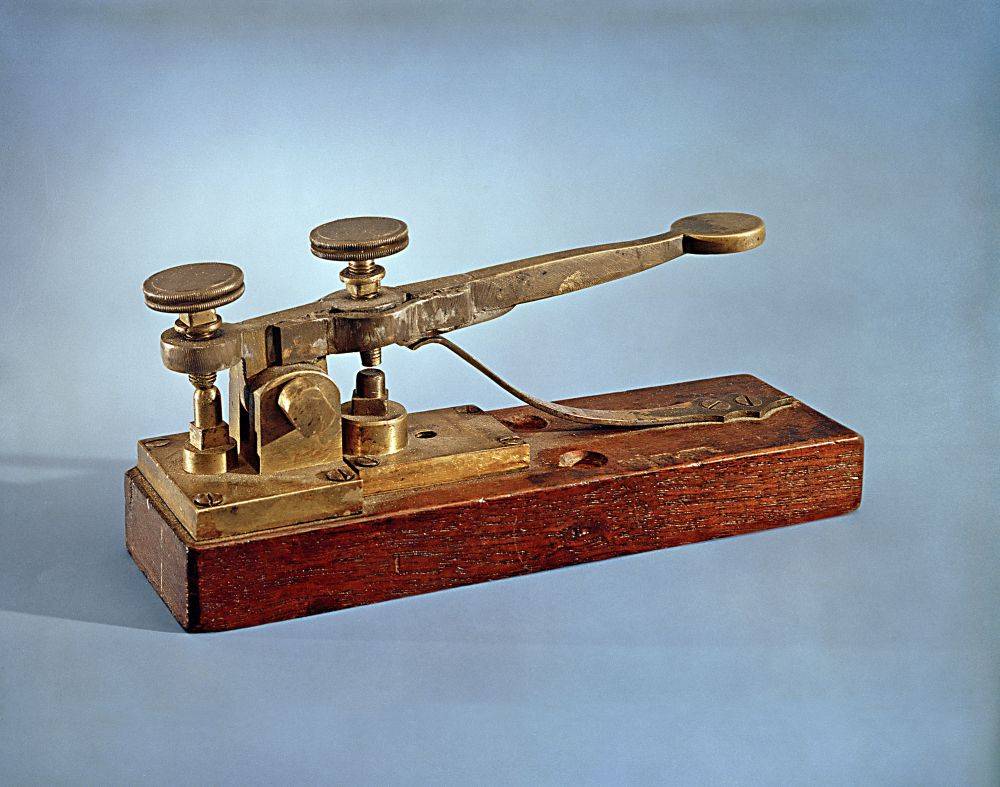
Morse successfully demonstrated his telegraph between Baltimore and Washington DC in May of 1844. Three days later the Democratic party convention commenced in Baltimore. In what turned out to be a masterstroke of “being in the right place at the right time,” Morse’s telegraph line happened to be in place to relay news of the convention back to the political classes in DC.

Recall, this was at a time when news was carried by horseback or, in the best case, by rail. It took hours for messages to travel between cities like Baltimore and DC – and they were just 45 miles apart.

Read More
3 Comments on In 1844, Morse Gets The Scoop, Then Tweets His Dinner

On Thneeds and the “Death of Display”

It’s all over the news these days: Display advertising is dead. Or put more accurately, the world of “boxes and rectangles” is dead. No one pays attention to banner ads, the reasoning goes, and the model never really worked in the first place (except for direct response). Brand marketers are demanding more for their money, and “standard display” is simply not delivering. After nearly 20 years*, it’s time to bury the banner, and move on to….

…well, to something else. Mostly, if you believe the valuations these days, to big platforms that have their own proprietary ad systems.

All over the industry, you’ll find celebration of new advertising-driven platforms that have eschewed the “boxes and rectangles” model. Twitter makes money off its native “promoted” suite of marketing tools. Tumblr just this week rolled out a similar offering. Pinterest recently hired Facebook’s original monetization wizard to create its own advertising model, separate from standard display. And of course there’s Facebook, which has gone so far as to call its new products “Featured Stories” (as opposed to “Ads” – which is what they are.) Lastly, we mustn’t forget the grandaddy of native advertising platforms, Google, whose search ads redefined the playing field more than a decade ago (although AdSense, it must be said, is very much in the “standard display” business).

Read More
38 Comments on On Thneeds and the “Death of Display”

On the State of Twitter Advertising: Adam Bain

Last week I wrote a post about Neal Mohan, who will be joining us for this month’s Signal conference in San Francisco. Today I’m focusing on Adam Bain and his role as President, Global Revenue at Twitter.

I’ve known Adam for some time, since his days at Fox Interactive Media, where he built Fox’s advertising platform (initially as a product out of MySpace). He joined Twitter a year and a half ago, and since then, has overseen the development of its “promoted” suite of products. Just recently, Twitter has expanded its roll out of what CEO Dick Costolo calls its “atomic unit” of advertising, the Promoted Tweet, to its mobile base, a significant move mirrored by Facebook at nearly the same time. It’s also opened up a self-service portal to its ad machine, a crucial move that drove early adoption of search and Facebook advertising.

When you are in charge of revenue for a company valued at $8 billion, the heat is on – the estimated $140 million or so Twitter pulled in last year ain’t gonna cut it. The company needs to scale its advertising platform to Google and Facebook levels, in terms of efficiency, response, and return on marketing investment. That’s no easy feat. In fact, it’s only been done a few times – by Facebook, Google, and arguably Overture (before Yahoo’s purchase and subsequent deal with Microsoft).

Read More
6 Comments on On the State of Twitter Advertising: Adam Bain

San Francisco In The Spring: Come To Signal

Over at the FM blog, I just posted the draft agenda for the first of five conferences I’ll be chairing as part of my day job at Federated Media. Signal San Francisco is a one-day event (March 21) focused on the theme of  integrating digital marketing across large platforms (what I’ve called “dependent web” properties) and the Independent Web. The two are deeply connected, as I’ve written here. As we explore that “interdependency,” we’ll also be talking about some of the most heated topics in media today: the role of mobile, the rise of brand-driven content, the impact of real-time bidded exchanges, and more.

Signal builds on the format I spent almost a decade crafting at the Web 2 Summit – the “high order bit,” or short, impactful presentation, as well as case studies and deeper-dive one-on-one interviews with industry leaders. Those include Jeff Weiner, CEO of LinkedIn, Adam Bain, President of Revenue at Twitter, Neal Mohan, who leads Google’s ad products, and Ross Levinsohn, who runs Yahoo! Americas, among others.

Others represented include Instagram, AKQA, Babycenter, Intel, Tumblr, WordPress, ShareThis, Facebook, and many more. I hope you’ll consider registering (the earlybird expires next week), and joining me for what’s certain to be a great conversation.

Leave a comment on San Francisco In The Spring: Come To Signal

Do You Think The US Government Is Monitoring Social Media?

http://cnettv.cnet.com/av/video/cbsnews/atlantis2/cbsnews_player_embed.swf

I had the news on in the background while performing morning ablutions. It was tuned to CBS This Morning – Charlie Rose has recently joined the lineup and my wife, a former news producer, favors both Rose and the Tiffany Network. But the piece that was running as I washed the sleep from my eyes was simply unbelievable.

It was about the two unfortunate british tourists detained by Homeland Security over jokes on Twitter about “destroying America” (a colloquialism for partying – think “tear up the town”) and “digging up Marilyn Monroe” whilst in Hollywood. DHS cuffed the poor kids and tossed them in a detention center with “inner city criminals,” according to reports, then sent them back home. Access denied.(I tweeted the story when it happened, then forgot about it.)

Read More
31 Comments on Do You Think The US Government Is Monitoring Social Media?

Once Again, RSS Is Dead. But ONLY YOU Can Save It!

About 14 months ago, I responded to myriad “RSS is Dead” stories by asking you, my RSS readers, if you were really reading. At that point, Google’s Feedburner service was telling me I had more than 200,000 subscribers, but it didn’t feel like the lights were on – I mean, that’s a lot of people, but my pageviews were low, and with RSS, it’s really hard to know if folks are reading you, because the engagement happens on the reader, not here on the site. (That’s always been the problem publishers have had with RSS – it’s impossible to monetize. I mean, think about it. Dick Costolo went to Twitter after he sold Feedburner to Google. Twitter! And this was *before* it had a business model. Apparently that was far easier to monetize than RSS).

Now, I made the decision long ago to let my “full feed” go into RSS, and hence, I don’t get to sell high-value ads to those of you who are RSS readers. (I figure the tradeoff is worth it – my main goal is to get you hooked on my addiction to parentheses, among other things.)

Anyway, to test my theory that my RSS feed was Potemkin in nature, I wrote a December, 2010 post asking RSS readers to click through and post a comment if they were, in fact, reading me via RSS. Overwhelmingly they responded “YES!” That post still ranks in the top ten of any post, ever, in terms of number of comments plus tweets – nearly 200.

Read More
573 Comments on Once Again, RSS Is Dead. But ONLY YOU Can Save It!