
The Audacity of Diaspora

Last Friday Businessweek ran a story on Diaspora, a social platform built from what might be called Facebook anti-matter. It’s a great read that chronicles the project’s extraordinary highs and lows, from Pebble-like Kickstarter success to the loss of a founder to suicide. Given the overwhelming hype around Facebook’s IPO this week, it’s worth remembering such a thing exists – and even though it’s in private beta, Diaspora is one of the largest open source projects going right now, and boasts around 600,000 beta testers.

I’ve watched Diaspora from the sidelines, but anyone who reads this site regularly will know that I’m rooting for it. I was surprised – and pleased – to find out that Diaspora is executing something of a “pivot” – retaining its core philosophy of being a federated platform where “you own your own data” while at the same time adding new Tumblr and Pinterest-like content management features, as well as integration with – gasp! – Facebook.  And this summer, the core team behind the service is joining Y Combinator in the Valley – a move that is sure to accelerate its service from private beta to public platform.

I like Diaspora because it’s audacious, it’s driven by passion, and it’s very, very hard to do. After all, who in their right mind would set as a goal taking on Facebook? That’s sort of like deciding to build a better search engine – very expensive, with a high likelihood of failure. But what’s really audacious is the vision that drives Diaspora – that everyone owns their own data, and everyone has the right to do with it what they want. The vision is supported by a federated technology platform – and once you federate, you lose central control as a business. Then, business models get very, very hard. So you’re not only competing against Facebook, you’re also competing against the reality of the marketplace – centralized domains are winning right now (as I pointed out here).

Read More
3 Comments on The Audacity of Diaspora

SIGN UP FOR THE NEWSLETTER

Stay up to date on the latest from BattelleMedia.com

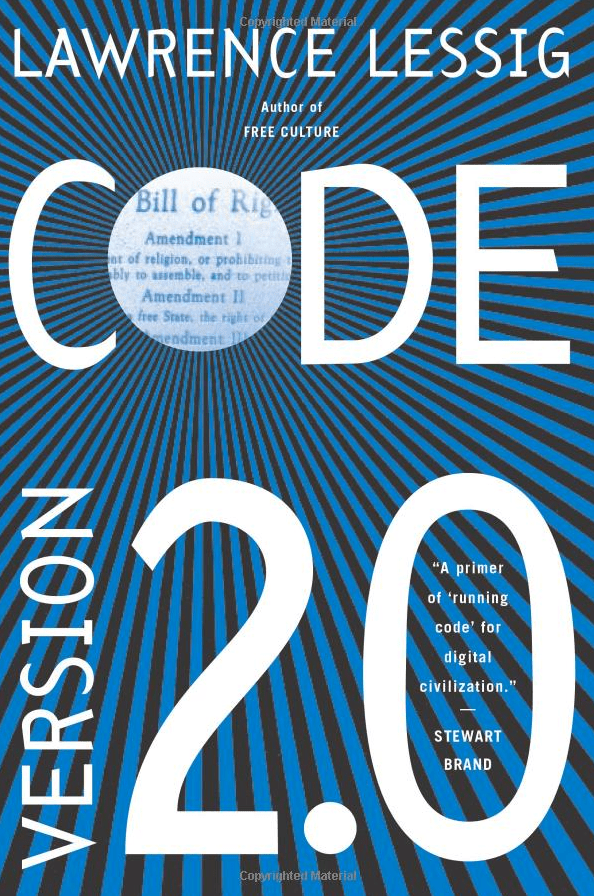
Larry Lessig on Facebook, Apple, and the Future of “Code”

Larry Lessig is an accomplished author, lawyer, and professor, and until recently, was one of the leading active public intellectuals in the Internet space. But as I wrote in my review of his last book (Is Our Republic Lost?), in the past few years Lessig has changed his focus from Internet law to reforming our federal government.

But that doesn’t mean Lessig has stopped thinking about our industry, as the dialog below will attest. Our conversation came about last month after I finished reading Code and Other Laws of Cyberspace, Version 2. The original book, written in 1999, is still considered an authoritative text on how the code of computing platforms interacts with our legal and social codes. In 2006, Lessig “crowdsourced” an update to his book, and released it as “Version 2.0.” I’d never read the updated work (and honestly didn’t remember the details of the first book), so finally, six years later, I dove in again.

It’s a worthy dive, but not an easy one. Lessig is a lawyer by nature, and his argument is laid out like proofs in a case. Narrative is sparse, and structure sometimes trumps writing style. But his essential point – that the Internet is not some open “wild west” destined to always be free of regulation, is soundly made. In fact, Lessig argues, the Internet is quite possibly the most regulable technology ever invented, and if we don’t realize that fact, and protect ourselves from it, we’re in for some serious pain down the road. And for Lessig, the government isn’t the only potential regulator. Instead, Lessig argues, commercial interests may become the most pervasive regulators on the Internet.

Read More
20 Comments on Larry Lessig on Facebook, Apple, and the Future of “Code”

Jaron Lanier: Something Doesn’t Smell Right

Jaron Lanier’s You Are Not A Gadget has been on my reading list for nearly two years, and if nothing else comes of this damn book I’m trying to write, it’ll be satisfying to say that I’ve made my way through any number of important works that for one reason or another, I failed to read up till now.

I met Jaron in the Wired days (that’d be 20 years ago) but I don’t know him well – as with Sherry Turkle and many others, I encountered him through my role as an editor, then followed his career with interest as he veered from fame as a virtual reality pioneer into his current role as chief critic of all things “Web 2.0.” Given my role in that “movement” – I co-founded the Web 2 conferences with Tim O’Reilly in 2004 – it’d be safe to assume that I disagree with most of what Lanier has to say.

I don’t. Not entirely, anyway. In fact, I came away, as I did with Turkle’s work, feeling a strange kinship with Lanier. But more on that in a moment.

Read More
9 Comments on Jaron Lanier: Something Doesn’t Smell Right

Get Ready for Some Pictures, Folks

A wine we enjoyed last weekend.

I’ve become increasingly troubled by the “data traps” springing up all over AppWorld and the Internet, and while I’ve been pretty vocal about their downsides, I also use them quite a bit – especially for photos. That, I hope, is about to end.

However, I’m afraid it means you, dear reader, are going to be seeing a few more pictures of Mount Tamalpais and my favorite wines here on Searchblog.

Read More
11 Comments on Get Ready for Some Pictures, Folks

Does the Pebble Cause a Ripple In Apple’s Waters?

Ever since the Pebble watch became an cause célèbre in tech circles for its kickass Kickstarter moves (it’s raised almost $7mm dollars and counting), something’s been nagging me about the company and its product.

It’s now Valley legend that the company had to turn to Kickstarter to get its working capital – more than 46,000 folks have backed Pebble, and will soon be proudly sporting their spiffy new iPhone-powered watches as a result. Clearly Pebble has won – both financially, as well as in the court of public opinion. I spoke to one early investor (through Y-Combinator) who had nothing but good things to say about the company and its founders.

But why, I wondered, were mainstream VCs not backing Pebble once it became clear the company was on a path to success?

Read More
58 Comments on Does the Pebble Cause a Ripple In Apple’s Waters?

A Coachella “Fail-ble”: Do We Hold Spectrum in Common?

Neon Indian at Coachella last weekend.


Last weekend I had the distinct pleasure of taking two days off the grid and heading to a music festival called Coachella. Now, when I say “off the grid,” I mean time away from my normal work life (yes, I tend to work a bit on the weekends), and my normal family life (I usually reserve the balance of weekends for family, this was the first couple of days “alone” I’ve had in more than a year.)

Read More
13 Comments on A Coachella “Fail-ble”: Do We Hold Spectrum in Common?

What Doesn’t the Valley Understand About Washington?

A few weeks ago I ventured to our nation’s capital to steep in its culture a bit, and get some first hand reporting done for the book. I met with about a dozen or so folks, including several scholars, the heads of the FCC and FTC, and senior folks in the Departments of Commerce and State. I also spoke to a lobbyist from the Internet industry, as well as people from various “think tanks” that populate the city. It was my first such trip, but it certainly won’t be my last.

Each of the conversations was specific to the person I was interviewing, but I did employ one device to tie them together – I asked each person the same set of questions toward the end of the conversation. And as I was on the plane home, I wrote myself a little reminder to post about the most interesting set of answers I got, which was to this simple question: What doesn’t the Valley understand about Washington?

It’s not a secret that the Valley, as a whole, has an ambivalent attitude toward DC. Until recently, the prevailing philosophy has trended libertarian – just stay out of the way, please, and let us do what we do best. Just about every startup CEO I’ve ever known – including myself – ignores Washington in the early years of a company’s lifecycle. Government is treated like plumbing – it’s dirty, it costs too much, it’s preferably someone else’s job, and it’s ignored until it stops working the way we want it to.

Read More
17 Comments on What Doesn’t the Valley Understand About Washington?

If-Then and Antiquities of the Future

Over the past few months I’ve been developing a framework for the book I’ve been working on, and while I’ve been pretty quiet about the work, it’s time to lay it out and get some responses from you, the folks I most trust with keeping me on track.

I’ll admit the idea of putting all this out here makes me nervous – I’ve only discussed this with a few dozen folks, and now I’m going public with what I’ll admit is an unbaked cake. Anyone can criticize it now, (or, I suppose, steal it), but then again, I did the very same thing with the core idea in my last book (The Database of Intentions, back in 2003), and that worked out just fine.

So here we go. The original promise of my next book is pretty simple: I’m trying to paint a picture of the kind of digital world we’ll likely live in one generation from now, based on a survey of where we are presently as a digital society. In a way, it’s a continuation and expansion of The Search – the database of intentions has expanded from search to nearly every corner of our world – we now live our lives leveraged over digital platforms and data. So what might that look like thirty years hence?

Read More
66 Comments on If-Then and Antiquities of the Future

Architectures of Control: Harvard, Facebook, and the Chicago School

Early in Lessig’s “Code v2,” which at some point this week I hope to review in full, Lessig compares the early campus networks of two famous educational institutions. Lessig knew them well – in the mid 1990s, he taught at both Harvard and the University of Chicago. Like most universities, Harvard and Chicago provided Internet access to their students. But they took quite different approaches to doing so. True to its philosophy of free and anonymous speech, Chicago simply offered an open connection to its students – plug in anywhere on campus, and start using the net.

Harvard’s approach was the polar opposite, as Lessig explains:

At Harvard, the rules are different….You cannot plug your machine to the Net at Harvard unless the machine is registered – licensed, approved, verified. Only members of the university community can register their machines. Once registered, all interactions with the network are monitored and identified to a particular machine. To join the network, users have to “sign” a user agreement. The agreement acknowledges this pervasive practice of monitoring. Anonymous speech on this network is not permitted – it is against the rules. Acceess can be controlled based on who you are, and interactions can be traced based on what you did.

Read More
6 Comments on Architectures of Control: Harvard, Facebook, and the Chicago School

China To Bloggers: Stop Talking Now. K Thanks Bye.

(image) Yesterday I finished reading Larry Lessig’s updated 1999 classic, Code v2. I’m five years late to the game, as the book was updated in 2006 by Lessig and a group of fans and readers (I tried to read the original in 1999, but I found myself unable to finish it. Something to do with my hair being on fire for four years running…). In any event, no sooner had I read the final page yesterday when this story breaks:

Sina, Tencent Shut Down Commenting on Microblogs (WSJ)

In an odd coincidence, late last night I happened to share a glass of wine with a correspondent for the Economist who is soon to be reporting from Shanghai. Of course this story came up, and an interesting discussion ensued about the balance one must strike to cover business in a country like China. Essentially, it’s the same balance any Internet company must strike as it attempts to do business there: Try to enable conversation, while at the same time regulating that conversation to comply with the wishes of a mercurial regime.

Read More
3 Comments on China To Bloggers: Stop Talking Now. K Thanks Bye.