A Social, Elastic Model for Paid Content

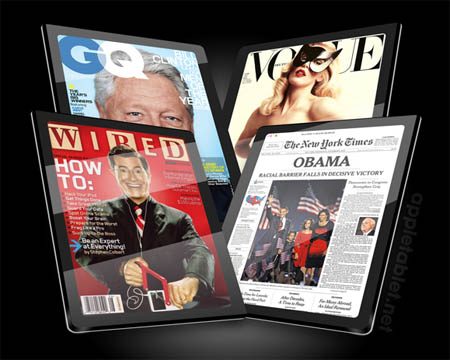
esquirepieceI was interested to read today that Esquire is currently experimenting with a per-article paywall. For $1.99, you can read a  10,000-word piece about a neurosurgeon who claims to have visited heaven. Esquire’s EIC on the experiment: “…great journalism—and the months that go into creating it—isn’t free. So, besides providing the story to readers of our print and digital-tablet versions of the August issue, we are offering it to online readers as a stand-alone purchase.”

I predicted that payment systems and paid services/content were going to take off this year (see here), but this isn’t what I had in mind. But it did get me thinking. What if you added social and elastic elements to the price? For example, the article would initially cost, say, $1.99, but if enough people decided to buy it, the price goes down for everyone. The more people who buy, the cheaper the price gets. It’d never go to zero, of course, but there’d be some kind of a demand/price curve that satisfies the two most important things publishers care about: readership (the more, the better) and revenue (ideally, enough to cover the costs of creation and make a fair profit).

The tools to do this already exist. There are plenty of sites that crowdsource demand to create pricing leverage, and sites like Kickstarter have gotten all of us used to the idea of hitting funding goals. And the social sharing behaviors already exist as well: Nearly all content has social sharing widgets attached these days. Why not combine the two? Those who initially paid the highest price – $1.99 say – would be motivated to share a summary of the article with friends and encourage them to buy it as well. They are economically incented to do so – the more friends who buy, the greater the chance that their initial $1.99 charge will decrease. And they’re socially incented to do so – perhaps they could get credit for being one of the early advocates or tastemakers who recognized and surfaced a great piece of content before anyone else did.

Read More
24 Comments on A Social, Elastic Model for Paid Content

SIGN UP FOR THE NEWSLETTER

Stay up to date on the latest from BattelleMedia.com

Craig Mod on Subcompact Publishing.

The Verge pointed me to Craig Mod’s manifesto on “Subcompact Publishing.” It’s a must read if you care about where digital publishing might go.

It’s a wonderful, thoughtful piece. It’s why we have this web thing. Go read it.

Oh, and my favorite quote:

Read More
Leave a comment on Craig Mod on Subcompact Publishing.

The Evolution of Display: Change Is Here, For Good

The first banner ad to run on the web – AT&T’s “You Will” campaign. It asked “Have you ever clicked your mouse right here?” The answer turned out to be “You Will…for a while. Then, not so much.”


Earlier this year I wrote a long post about the “death of display,” since then, I’ve consistently been asked about it, and in particular, to expand on my thoughts around display advertising economics, and the prospects for what might broadly be termed “independent creators of content,” or what I call “the independent web.”

Read More
19 Comments on The Evolution of Display: Change Is Here, For Good

Musings On “Streams” and the Future of Magazines

I’ve run into a number of folks these past few days who read my piece last week: The State of Digital Media: Passion, Goat Rodeos, and Unicorn Exits…. Some of you have asked me to explain a bit more on the economic issues regarding media startups. I didn’t really go too deep into them, but as I was answering one fellow in email, I realized I didn’t really explain how complicated they really are, particularly if you want to make new forms of publications. I’ll get into that in the second part of this post, but first, I wanted to address a few articles that have touched on a portion of the issue, in particular The Pretty New Web and the Future of “Native” Advertising (by Choire Sicha) and What happens to advertising in a world of streams? (by Matthew Ingram).

Bridging the Stream

Both these posts tackle the emerging world of “stream”-driven content, painting them as opposite to the format we’ve pretty much used for the past 20 years – “page”-based content (like this page, for example). An established, at-scale business model exists for page-driven content, and it’s called display advertising. And anyone who’s been reading this site knows that display advertising is under pressure from two sides: first, the rise of massive platforms that harvest web pages and monetize them in ways that don’t pay the creators (Facebook, Twitter, Pinterest) and secondly, the dramatic growth of programmatic buying platforms that do pay creators, but the payment amounts are too low to support great content (second generation ad networks called DSPs, backed by agencies and their marketing clients).

Read More
15 Comments on Musings On “Streams” and the Future of Magazines

The State of Digital Media: Passion, Goat Rodeos, and Unicorn Exits….

Earlier in the week I was interviewed by a sharp producer from an Internet-based media company. That company, a relatively well-known startup in industry circles, will be launching a new site soon, and is making a documentary about the process. Our conversation put a fine point on scores of similar meetings and calls I’ve head with major media company execs, content startup CEOs, and product and business leaders at well known online content destinations.

When I call a producer “sharp,” I mean that he asked interesting questions that crystalized some thoughts that have been bouncing around my head recently. The main focus of our discussion was the challenges of launching new media products in the current environment, and afterwards, it struck me I might write a few words on the subject, as it has been much on my mind, and given my history as both an entrepreneur and author in this space, I very much doubt it will ever stop being on my mind. So here are a couple highlights:

* We have a false economy of valuation driving many startups in the content business. Once a year or so, an Internet media site is sold for an extraordinary amount of money, relative to traditional metrics of valuation. Examples include The Huffington Post, which sold for a reported 10X annual revenues, and, just this past week, Bleacher Report, which sold for even more than that ($200million or so on revenues, from what I understand, that were less than $20mm a year).

Read More
14 Comments on The State of Digital Media: Passion, Goat Rodeos, and Unicorn Exits….