
A tech giant partners with a bioinformatics pioneer to create an entirely new kind of genetic map.

Leave a comment on All We Have Yet To Understand
A tech giant partners with a bioinformatics pioneer to create an entirely new kind of genetic map.
 (image) This past week saw a significant increase in society’s willingness to have a deeper conversation about what it means to Become Data. The Supreme Court heard arguments in a case that may well supplant the Betamax case in import. And the FCC stepped in it, big time, while pals at O’Reilly opinined for a world where the Internet of Things remains open and transparent. Not to mention, my own ramblings on what it means to truly disappear, and why Google does what it does. To the links….
To subscribe to Else via email, click here.
Goodbye, Net Neutrality; Hello, Net Discrimination : The New Yorker
Read More We are all accustomed to the idea of software “Preferences” – that part of the program where you can personalize how a particular application looks, feels, and works. Nearly every application that matters to me on my computer – Word, Keynote, Garage Band, etc. – have preferences and settings.
On a Macintosh computer, for example, “System Preferences” is the control box of your most important interactions with the machine.
I use the System Preferences box at least five times a week, if not more.
Read More As you work on a book, even one as slow to develop as if/then, certain catch phrases develop. People ask you what the book is about, or the shape of its core argument, and some of the descriptions start to stand out and hit home. One of those is “a world lit by data,” an idea I’ve been toying with for some time now. It’s a metaphor that’s not entirely worked out, but it seems to get the job done – it paints a picture of a time when everything of value around us – everything we “see” – has a component of data to it. In a world lit by data, street corners are painted with contextual information, automobiles can navigate autonomously, thermostats respond to patterns of activity, and retail outlets change as rapidly (and individually) as search results from Google.
The tortured bit of the metaphor is in asking you, the reader, to believe that we will live in spaces full of data, just as we live in spaces filled with light (be it natural or man made). Everyone understands the idea of light as metaphor. But data? Well, to my mind, they are quite connected. Without light, we can’t (easily) take in information about our physical surroundings. In darkness there is far less data. Equating “light” with “data” isn’t too much of a stretch.
Now, the interplay of light and “information” is dangerous but well-trodden ground. After all, in the Old Testament, the first thing God did after creating the physical (Heavens and Earth) was to turn on the lights. And after further contemplation, Christians decided that before Light, there was The Word, which was God’s will made flesh (John 1). Since then, of course, “the word” has come to mean, well, encoded information, or data. Loosely put (and I know I’m on thin ice here) – first we establish the physicality of that which we don’t fully understand, then we bathe it in light, hoping to understand it the best we can.
Read More (image) According to Wikipedia, “deadpan” is a uniquely American neologism less than a century old. The term arose from the slang term “pan,” for face: “Keep a dead pan,” a gangster told an associate in 1934’s The Gay Bride. In other words, don’t show your cards.
“Deadpan humor,” of course, is playing a joke straight, pretending you’re unaware of the punchline. It’s often related to “dark” or “black” humor, which makes light of otherwise serious situations, often with a cynical or satirical tone.
Why am I on about this now? Because I think as a society we’re rapidly shifting into a dark, deadpan culture, driven almost entirely by revelations around the NSA’s PRISM and related programs. We know we can’t pretend we’re not being monitored – so we resort to deadpan humor to handle that new reality.
Read More
The agenda for our seventh annual CM Summit is live. And it rocks. You can read all about it here. I am really looking forward to this conversation, mainly due to the quality of the folks who are coming. Oh, and the theme, of course.
I won’t beat around the bush. I want you all to come. I’ve lowered the price, because I heard from many of you last year that the ticket was too high (it sold out anyway). But this year, the conversation is too rich for anyone to cry poor over. Come and join us.
Read More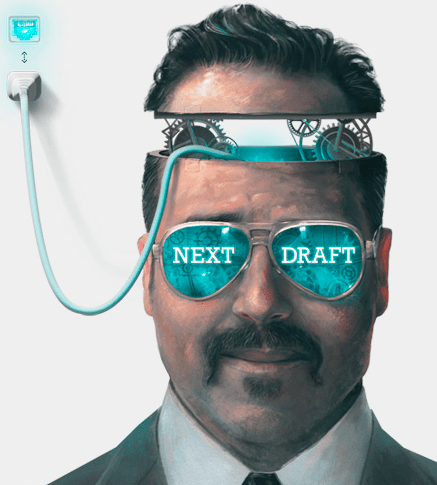 I enjoy NextDraft, an email newsletter penned by Dave Pell each day. I value point of view and voice in any medium, and Dave’s got it. I think Searchblog readers would appreciate this item, so I’ve reposted it here. Dave, I hope you don’t mind…
The Gift of Data
Facebook knows a lot about you. But there are a couple things that would make its collection of personal data a whole lot more valuable: Your home address and your credit card number. In addition to having a big revenue potential, Facebook’s new birthday gift store could lead to a data treasure trove (and herald a new era when just typing “Happy Birthday” when prompted is no longer enough).
 In my continuing quest to reflect on books which I have found important to my own work, I give you a work of fiction, first published in mid-2011: Super Sad True Love Story: A Novel, by Gary Shteyngart, an acclaimed writer born in Russia, now living in the US. This is my first read of Shteyngart, known also for his previous works Absurdistan and Russian Debutante’s Handbook, both of which established him as an important new literary voice (Ten Best Books – NYT, Book of the Year – Time, etc. etc….). Of course, I was barely aware of Shteyngart until a friend insisted I read “Super Sad” and I will forever be grateful for the recommendation.
Based in a future that feels to be about thirty years from now (the same timeframe as my pending book), Shteyngart’s story stars one Lenny Abramov, a schlumpy 39-year-old son of Jewish Russian immigrants who lives in New York City. Abramov works at a powerful corporation that sells promises of immortality to “High Net Worth” individuals. But he’s not your typical corporate climber: The book begins in Italy, where Abramov has taken a literary vacation of sorts – he’s left an America he no longer loves to be closer to a world that he does – a dying world of art, literature, and slower living. But Abramov’s duty to his parents and his need for money drive him back to America, where most of the action occurs.
It turns out the future hasn’t been very kind to America. Just about every possible concern one might have about our nation’s decline has played out – the economy is in a death spiral, the Chinese pretty much control our institutions, large corporations control what the Chinese don’t, books and intelligent discourse have disappeared, shallowness and rough sex are glorified, and the Constitution has pretty much been suspended. Oh, and while the book doesn’t exactly put it this way, Facebook and Apple have won – everyone is addicted to their devices, and to the social reflections they project.
Read More
(image shutterstock) I’ve been watching the news for tidbits which illuminate a thesis I’ve been working up for my book. Today the New York Times provided a doozy: Swiss Cows Send Texts to Announce They’re in Heat. As James Gleick, author of The Information, noted in a Twitter response to me: That’s one heckuva headline.
So what’s my thesis? It starts with one of the key takeaways from Gleick’s book, which is that we are, as individuals and a society, becoming information. That might seem a rather puzzling statement, because one could argue that we’ve always been information, it’s only recently that we’re realizing that fact. So perhaps a better way of putting it is that we’re exploring the previously unmapped world of information. In the 1400s, the physical world was out there, much as it is today (perhaps it had a few more glaciers…). But we hadn’t discovered it, at least, not in any unified fashion. Now that we’ve discovered, named, and declared the outlines of most of the physical world, we are rapidly moving into a new era, one where we are coloring in the most interesting bits of information in our world with what we now call “data.”
Read More